Choosing an industrial valve looks simple on paper. You need something that opens, closes, or regulates flow. In practice, the wrong valve can cause leaks, unplanned shutdowns, safety incidents, and maintenance costs that far exceed the valve's purchase price. Whether you're specifying valves for a new plant, replacing worn components, or upgrading an existing pipeline, a structured selection process saves time and money over the life of the system.
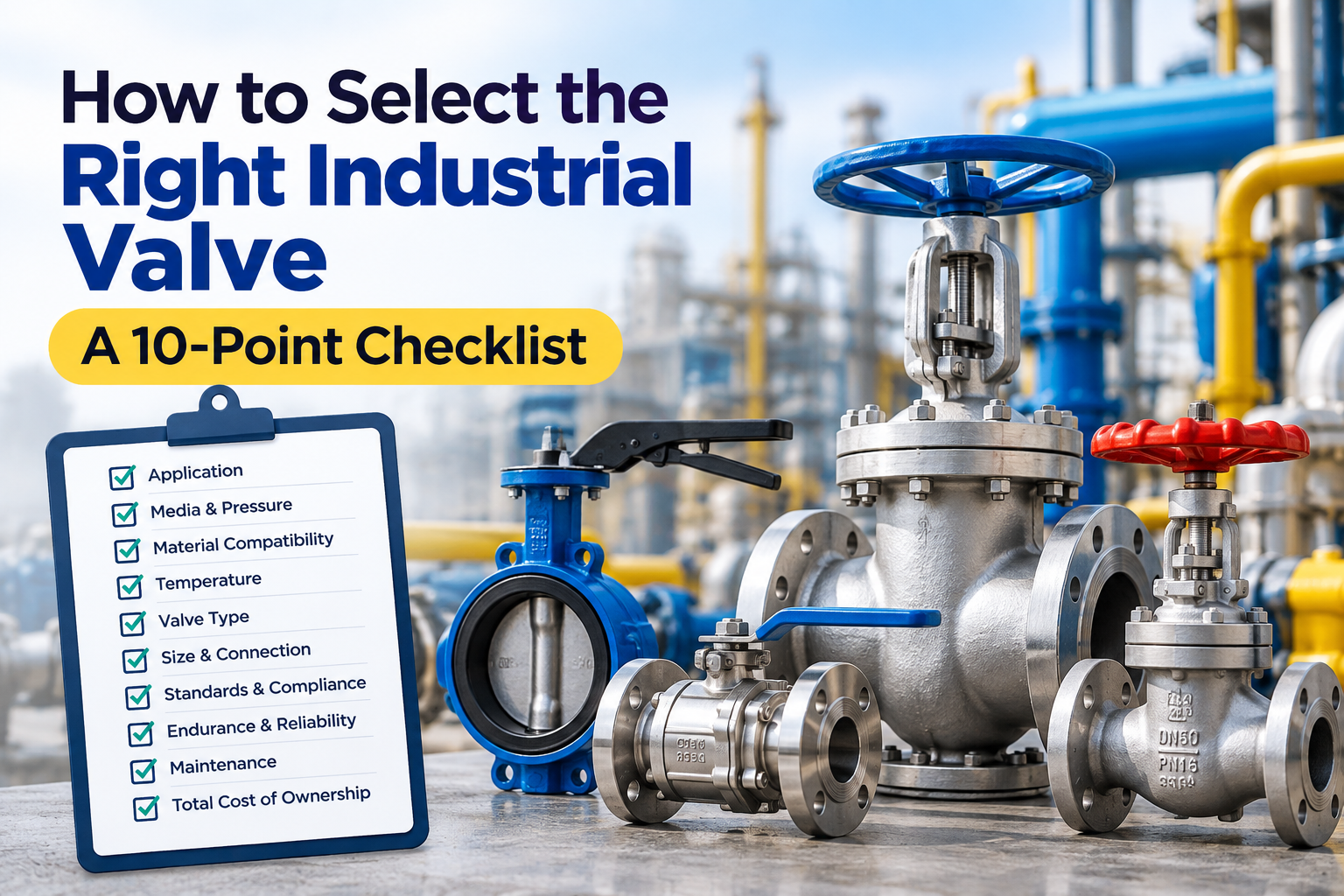
This 10-point checklist walks you through the factors engineers and procurement teams should evaluate before placing an order.
1. Define the Valve's Function
Start with what the valve actually needs to do. Isolation valves such as gate valves and ball valves are designed for full open or full close service. Regulation valves such as globe valves and butterfly valves control flow rate. Non-return valves such as check valves prevent backflow, while safety and relief valves protect equipment from overpressure. Using an isolation valve for throttling, for example, leads to seat erosion and early failure. Clarity on function narrows your options immediately.
2. Understand the Media Being Handled
The fluid or gas passing through the valve shapes nearly every other decision. Consider whether the media is clean or contains solids, whether it is corrosive, abrasive, viscous, toxic, or flammable, and whether it is a liquid, gas, steam, or slurry. Slurries call for designs that resist clogging and wear, while aggressive chemicals demand compatible body, trim, and seal materials.
3. Check Pressure Ratings
Every valve has a maximum pressure it can safely handle, usually expressed as a pressure class (such as ANSI Class 150, 300, 600) or PN rating. Select a valve rated for your maximum operating pressure plus a sensible safety margin, and account for pressure surges or water hammer that may occur during start-up and shutdown.
4. Evaluate Temperature Conditions
Pressure and temperature work together. A valve's pressure rating typically drops as temperature rises, so always check the pressure-temperature chart for the material you're considering. Extreme heat can degrade soft seats and packing, while cryogenic service requires materials and designs that stay tough at very low temperatures, such as extended bonnets.
5. Choose the Right Body and Trim Materials
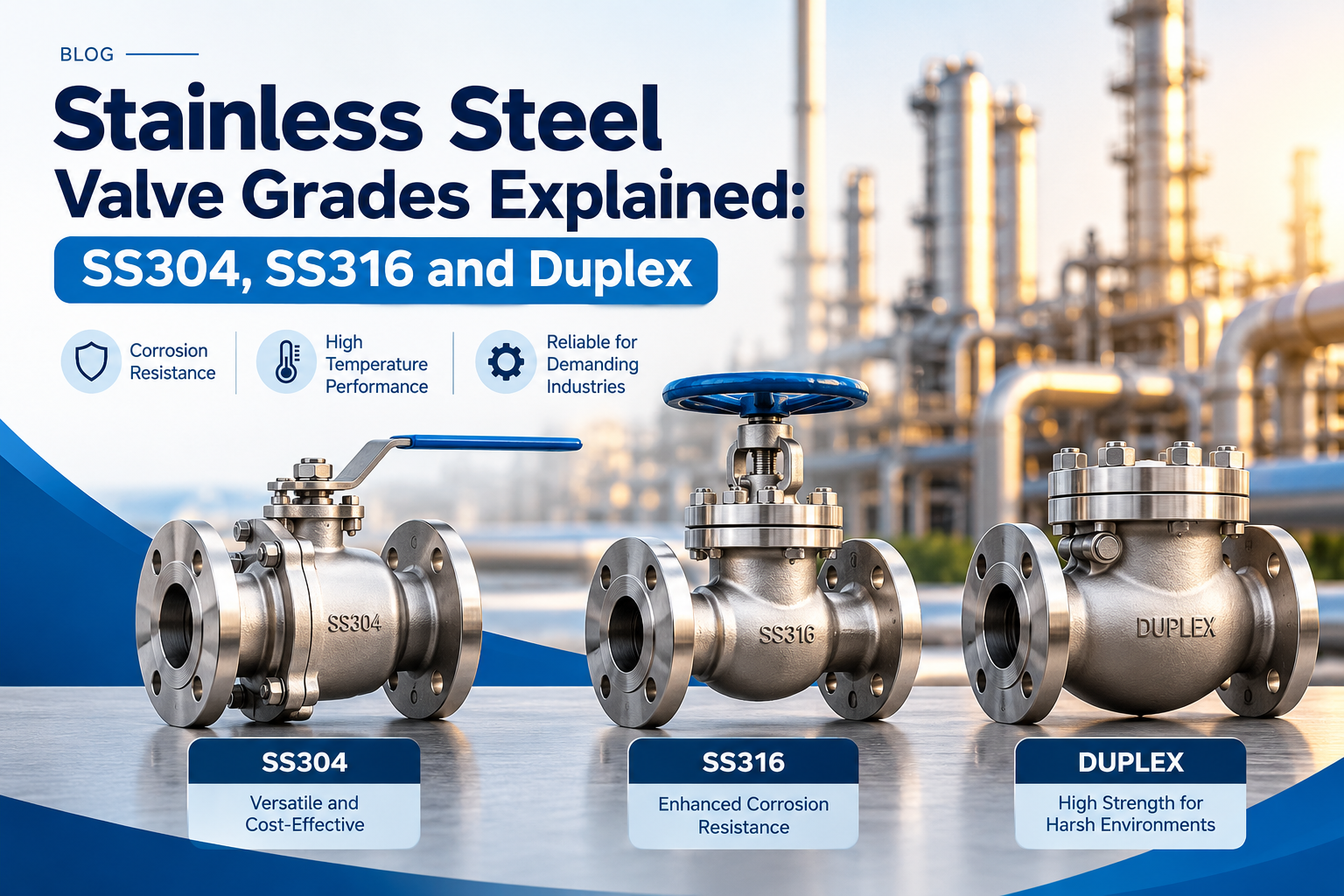
Material selection determines durability and corrosion resistance. Common body materials include cast iron for low-pressure water service, carbon steel for general industrial use, stainless steel for corrosive or hygienic applications, and alloys such as duplex or Hastelloy for highly aggressive environments. Don't overlook the trim (disc, seat, stem) and seals, since these internal parts often fail first when poorly matched to the media.
6. Size the Valve Correctly
Oversizing is one of the most common and costly mistakes. An oversized control valve operates near its closed position, causing poor control, noise, and seat damage. An undersized valve creates excessive pressure drop and restricts flow. Use the flow coefficient (Cv or Kv), required flow rate, and allowable pressure drop to size the valve properly rather than simply matching the pipe diameter.
7. Select the End Connection
How the valve connects to your pipeline affects installation, maintenance, and leak integrity. Flanged ends are easy to remove and suit larger lines. Threaded ends work well for small-bore, low-pressure systems. Butt-weld and socket-weld ends offer strong, leak-resistant joints for high-pressure or hazardous service. Make sure the connection standard matches your existing piping specification.
8. Decide on the Actuation Method
Valves can be operated manually with a handwheel, lever, or gearbox, or automatically using pneumatic, electric, or hydraulic actuators. Manual operation suits valves that are rarely adjusted and easily accessible. Automated actuation is ideal for remote locations, frequent cycling, emergency shutdown systems, and integration with plant control systems. Consider fail-safe requirements too, meaning whether the valve should fail open, fail closed, or hold its last position if power is lost.
9. Verify Standards, Testing, and Certifications
Reputable valves are designed and tested to recognised standards such as API, ASME, BS, DIN, or IS, depending on your industry and geography. Ask for documentation covering hydrostatic and seat leakage testing, material test certificates, and any sector-specific approvals your application requires, such as fire-safe certification for oil and gas or specific approvals for potable water. Proper documentation protects you during audits and inspections.
10. Consider Total Cost of Ownership and Supplier Support
The cheapest valve upfront is rarely the cheapest over its lifetime. Factor in expected service life, maintenance frequency, spare parts availability, and downtime costs. Equally important is the supplier behind the product. A dependable manufacturer offers technical guidance during selection, consistent quality, reasonable lead times, and responsive after-sales support. Partnering with an experienced Industrial Valve Manufacturer in India can also help you balance quality with competitive pricing, whether you're supplying domestic projects or export markets.
Quick Recap
Before finalising any valve, confirm its function, media compatibility, pressure and temperature ratings, materials, size, end connections, actuation, compliance, and long-term cost, along with the credibility of the manufacturer. Working through these ten points systematically reduces the risk of failure and keeps your operations running safely and efficiently.
Need Help Choosing the Right Valve?
Every application is different, and expert input at the selection stage can prevent expensive mistakes later. Apollo India Valves offers a wide range of industrial valves built for demanding applications, backed by technical support to help you find the right fit for your process.
Explore the full product range and get in touch with the team today: https://www.apolloindiavalves.com/