Introduction
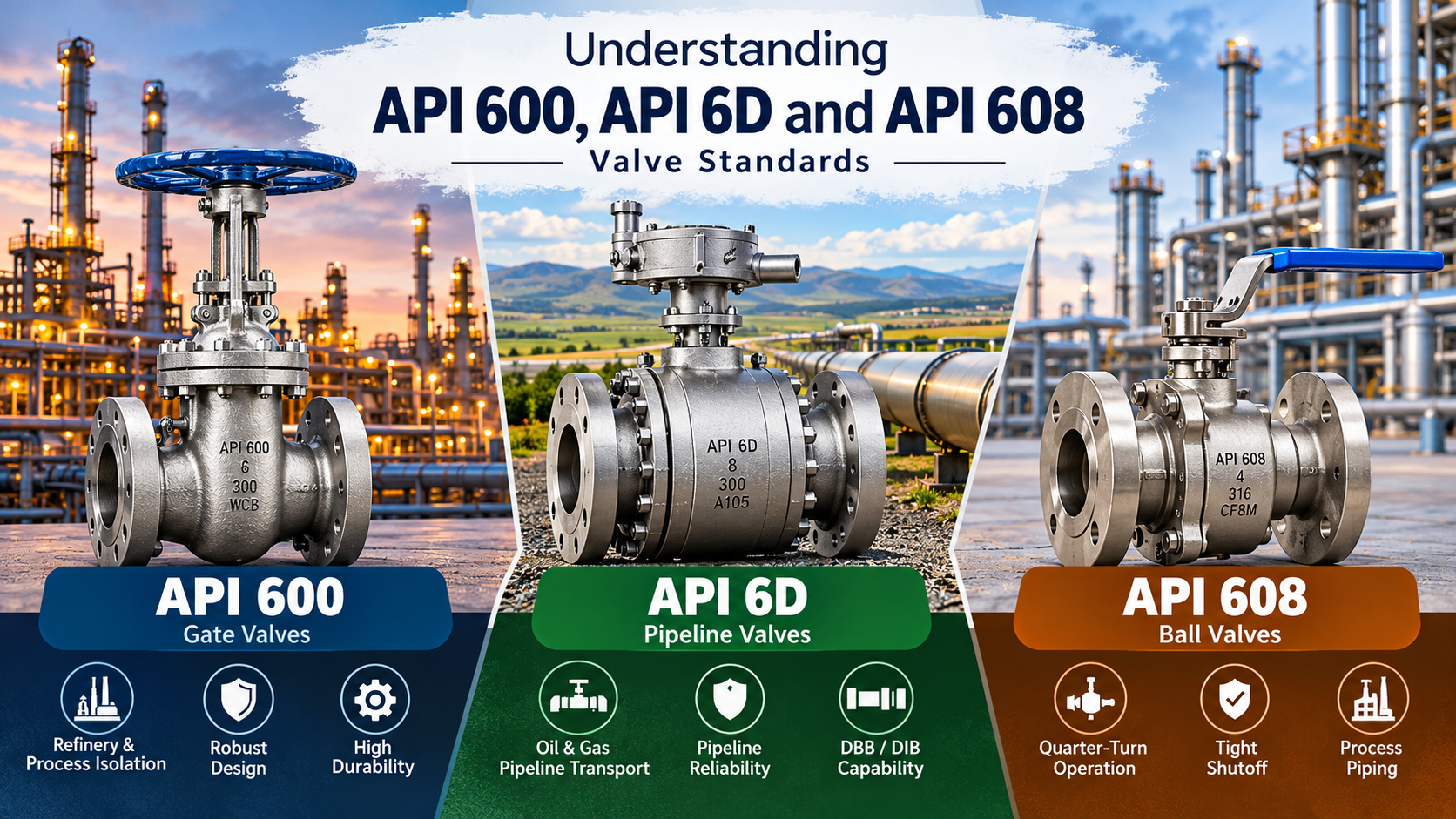
Quick answer: API 600 covers heavy-duty steel gate valves for refineries and process plants. API 6D covers pipeline valves (ball, gate, plug and check) used to transport oil, gas and other fluids. API 608 covers metal ball valves for general process piping. Each standard sets out design, material, testing and documentation requirements, and buyers usually specify one of them depending on where the valve will be installed.
If you've ever looked at a valve datasheet or an EPC tender, you've seen these three standards listed. They often appear side by side, which is why so many buyers mix them up. A valve built to the wrong standard may still work, but it can fail inspection, delay a project or wear out much sooner than expected in service.
This guide explains what each standard covers, how they differ, and what to check when you're sourcing valves from the top valve manufacturers in India.
Why API Standards Matter in Valve Procurement
The American Petroleum Institute (API) publishes standards that set a shared baseline for how valves are designed, built and tested. When a datasheet says "API 600" or "API 6D", everyone involved, including the end user, the EPC contractor, the third-party inspector and the manufacturer, works from the same requirements.
For buyers, this means fewer surprises. An API-compliant valve has gone through set wall-thickness checks, material requirements and pressure tests before it leaves the factory. For plants in oil and gas, petrochemicals, power and chemicals, that consistency matters a great deal, because one leaking valve can shut down an entire process line.
API 600: Steel Gate Valves for Refinery Service
API 600 covers bolted-bonnet steel gate valves with flanged or butt-welding ends. It's the standard most refineries and petrochemical plants specify for their isolation gate valves.
What makes API 600 stand out is that it's built heavy on purpose. It calls for minimum wall thicknesses that go beyond the general requirements in ASME B16.34, which gives extra corrosion allowance for valves expected to stay in harsh service for decades. The valves use an outside screw and yoke (OS&Y) design with a rising stem, so operators can see at a glance whether the valve is open or closed.
Key features of API 600 gate valves include:
- Pressure classes from 150 to 2500
- Solid, flexible or split wedge designs
- Standard trim numbers (such as Trim 5, 8 and 12) that define the materials for the seat, wedge and stem
- Backseat design that allows the stem to be repacked under pressure
- Testing according to API 598
API 600 gate valves are best suited to on/off isolation in refinery units, steam lines, hydrocarbon processing and high-temperature service. They aren't designed for throttling. If you need flow control, a globe valve is the better choice.
API 6D: Pipeline and Piping Valves
API 6D is the standard for valves used in pipeline transport systems, such as cross-country oil and gas lines, gathering systems, compressor stations and terminals. It covers several valve types: ball, gate, plug and check valves.
Where API 600 focuses on toughness inside the plant, API 6D focuses on reliability across long distances. Pipeline valves are often buried, remote or hard to reach, so they have to seal reliably for years with little maintenance.
API 6D includes requirements and options that you won't find in plant-level standards:
- Double block and bleed (DBB) and double isolation and bleed (DIB-1, DIB-2) functions, which let operators isolate a section and confirm it's sealed
- Full-bore, piggable designs, so pipeline cleaning and inspection tools (pigs) can pass through
- Emergency sealant injection points for seat recovery in the field
- Cavity pressure relief to prevent pressure from building up inside the body
- Stricter hydrostatic and seat testing, with supplementary tests available on request
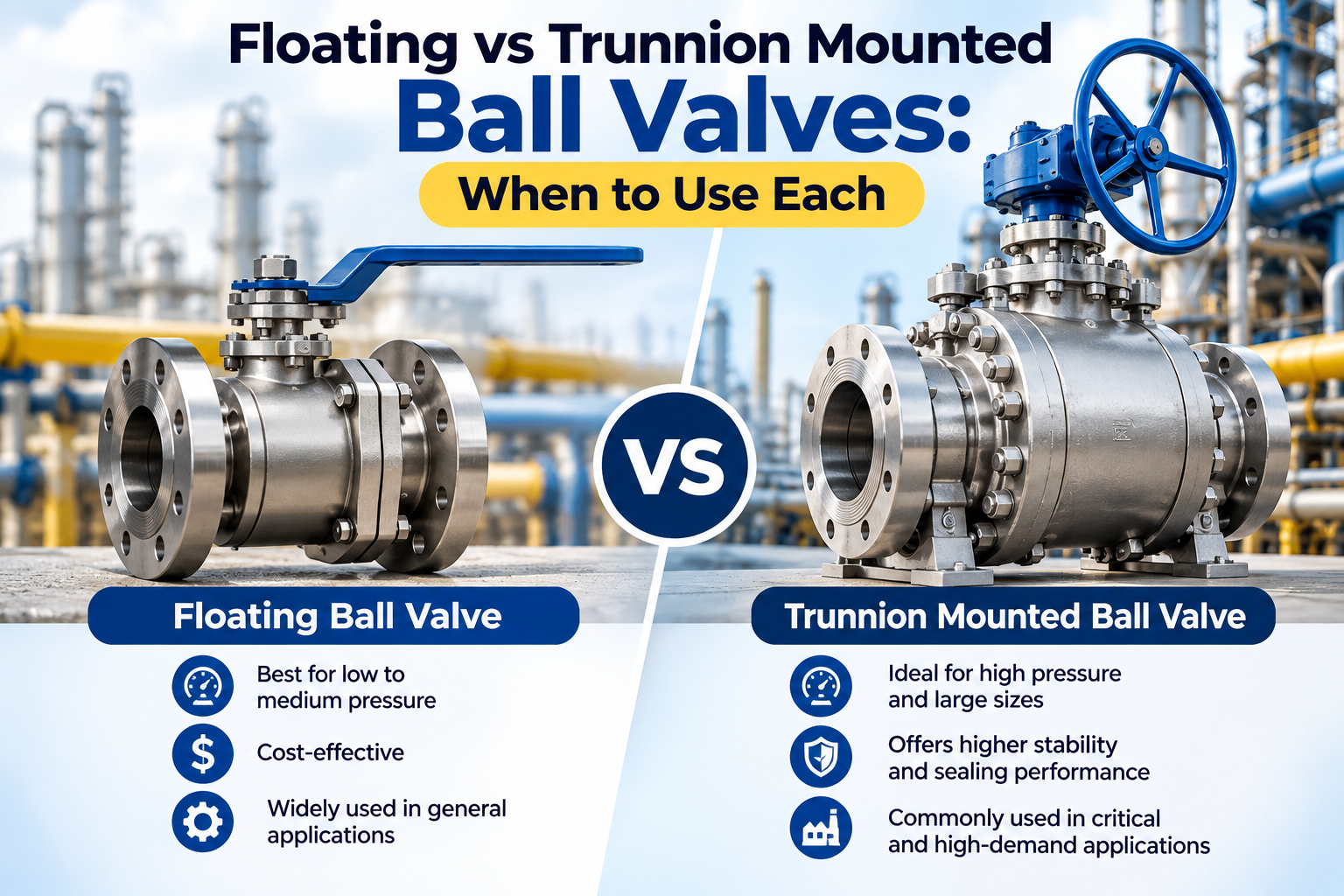
Most API 6D ball valves above certain sizes and pressure classes use a trunnion-mounted design, because the ball is held in place by bearings and the operating torque stays manageable even at high line pressure.
API 608: Metal Ball Valves for Process Piping
API 608 covers metal ball valves with flanged, threaded, socket-weld or butt-weld ends for use in petroleum, petrochemical and general industrial piping.
You can think of API 608 as the plant-side ball valve standard. It typically covers smaller to medium sizes and lower pressure classes than API 6D, which makes it a common choice for utility lines, chemical dosing, process isolation and general refinery piping.
Typical API 608 requirements include:
- Pressure classes up to Class 600 for flanged and butt-weld ends
- Floating ball designs as the norm, with trunnion designs for larger sizes
- Blowout-proof stems and anti-static features
- Soft or metal seats depending on the service
- Testing according to API 598, with fire-safe certification to API 607 where needed
API 608 valves offer quick quarter-turn operation, tight shutoff and a compact body, which makes them easy to automate with pneumatic actuators or electric actuators.
API 600 vs API 6D vs API 608: Side-by-Side Comparison
Feature | API 600 | API 6D | API 608 |
|---|---|---|---|
Valve type | Gate valves | Ball, gate, plug, check | Ball valves |
Main application | Refinery and process isolation | Pipeline transport | Plant process piping |
Key design focus | Heavy wall thickness, durability | Long-distance reliability, DBB/DIB | Compact quarter-turn shutoff |
Typical testing | API 598 | API 6D's own test requirements | API 598 |
Fire test (if required) | API 607 / API 6FA | API 6FA | API 607 |
The simple rule is to choose by location. Inside the plant fence, use API 600 for gate valves and API 608 for ball valves. On the pipeline, use API 6D.
How to Choose the Right Standard for Your Project
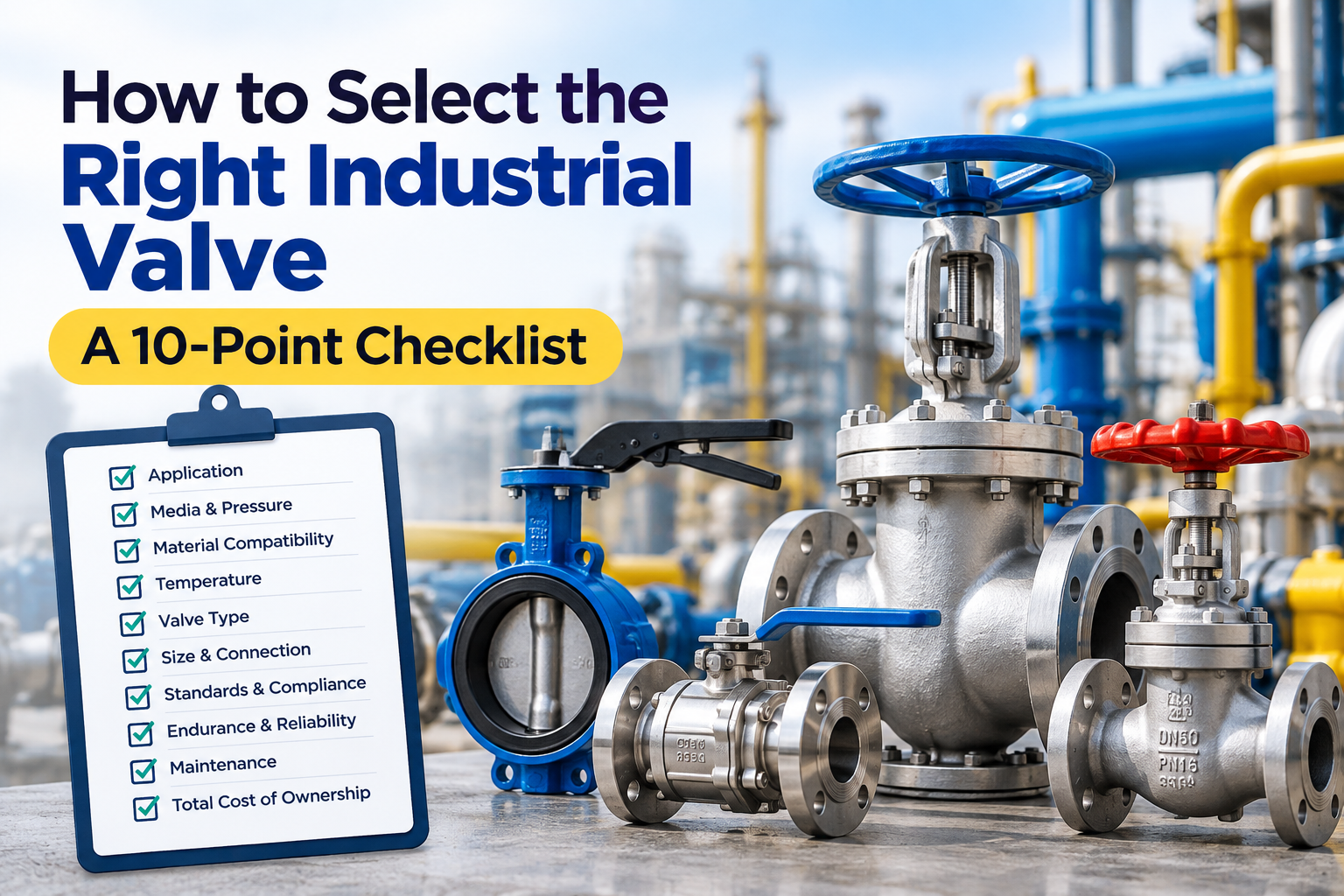
Start with your project specification or piping class. In most cases the standard is already written into the datasheet, and you only need to make sure the supplier can meet it. If you're building a specification from scratch, consider these questions:
Where will the valve be installed? Pipeline sections call for API 6D. Process units inside the plant usually call for API 600 or API 608.
What does the valve need to do? For pure isolation in high-temperature or corrosive refinery service, API 600 gate valves are the industry standard. For quick shutoff in process lines, API 608 ball valves are faster and lighter.
Do you need DBB or piggability? If so, API 6D is the only one of the three that formally covers these functions.
What documentation is required? Ask for material test certificates (EN 10204 3.1), pressure test reports and, where relevant, fire-safe certificates. Good manufacturers include these with every shipment as standard.
What to Look For in API Valve Manufacturers
Not every supplier that mentions API on its website builds to the full standard. When you're shortlisting the top valve manufacturers in India, check the following:
- In-house testing facilities for hydrostatic shell, seat and pneumatic tests
- Material traceability from raw casting or forging to the finished valve
- Third-party inspection support for agencies such as TÜV, BV, Lloyd's or the client's own inspectors
- Clear trim and material options matched to your media, temperature and pressure
- Engineering support to review datasheets and flag mismatches before production
Apollo India Valves manufactures a range of industrial valves at its Bhosari MIDC, Pune facility for oil and gas, chemical, pharmaceutical, water treatment and power plants, with complete documentation and inspection support.
Conclusion
API 600, API 6D and API 608 each serve a different part of the system. API 600 gives refinery gate valves their strength. API 6D keeps pipelines sealed over long distances. API 608 delivers fast, reliable shutoff across plant piping. Knowing which standard fits your application helps you write better specifications, avoid inspection rejections and get valves that last.
If you're looking for a dependable partner among the top valve manufacturers in India, explore the full range at Apollo India Valves or contact the team for a technical discussion and quotation.